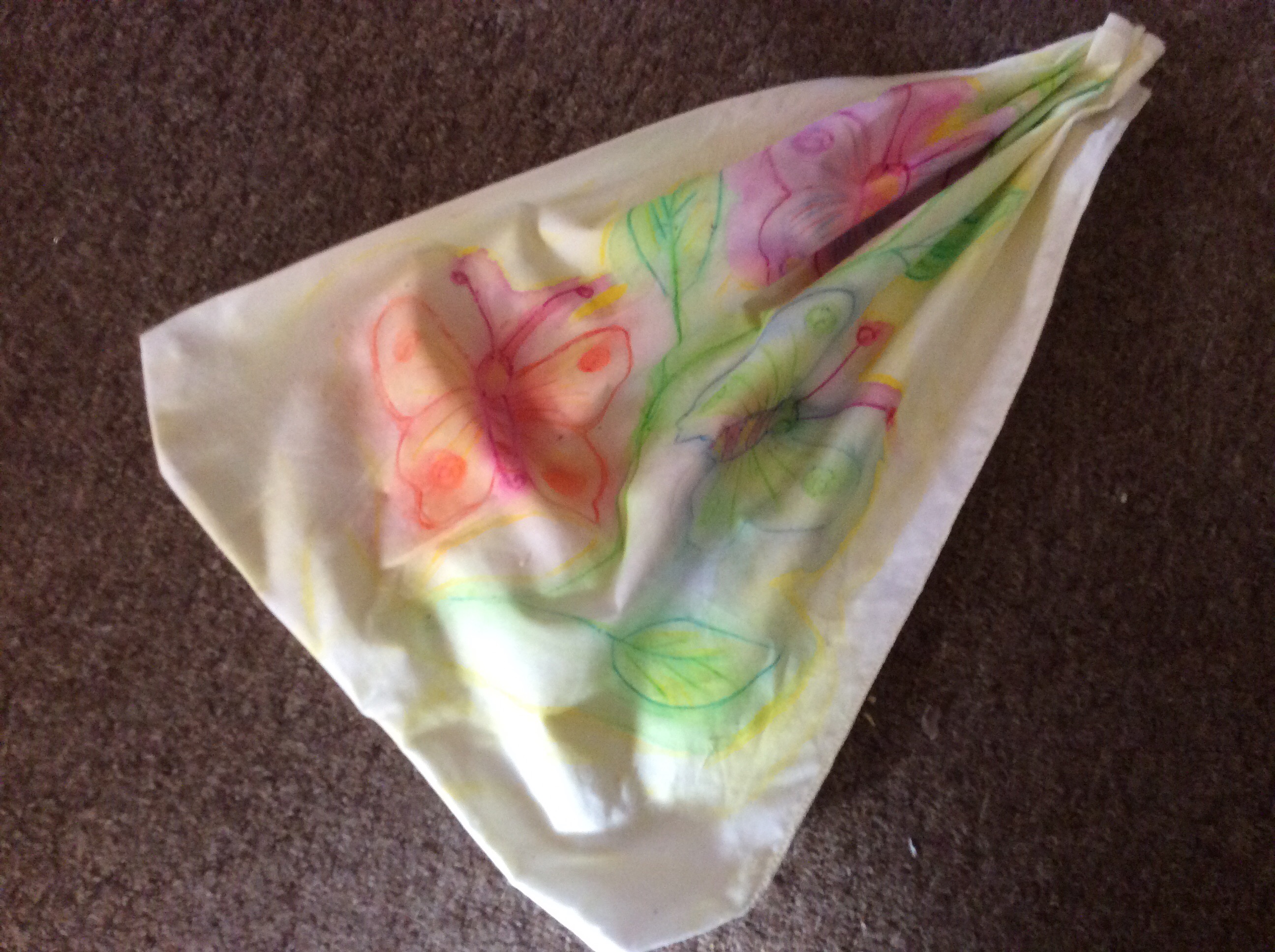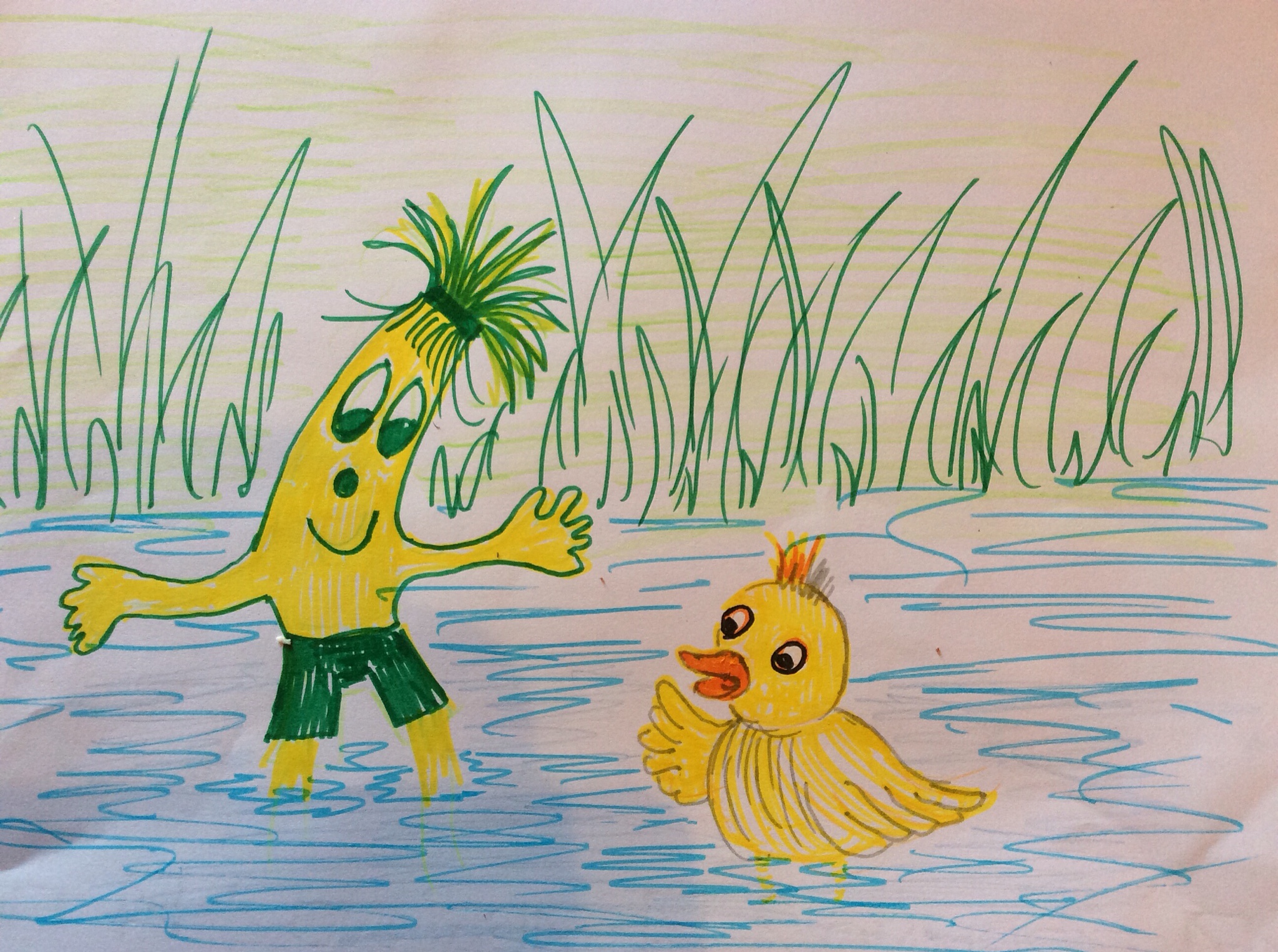
Printing with INKTENSE PENCIL CRAYONS 

The Sunday Challenge programme showing us painting on fabric can be reached by clicking on the link below.

                   Painting on fabric at Jumble House


It may seem strange to use artist’s materials for a child’s project but I did this for several reasons.

  • I use the INKTENSE pencils myself so it made economical sense! 
  • I believe that children should whenever possible use good materials for art because they produce much better results.  This, in turn, motivates them to do more.  No doubt you have all experienced painting on that dreadful sugar paper provided by schools? Need I say more! Using poor quality materials produces poor quality results which can put people off painting for life! 
  • Projects produced with these pencils not only have a WOW factor but will last! 

INKTENSE PENCIL CRAYONS are extremely versatile and are equally effective when applied to paper or fabric. They can be used to create a diverse range of art from vibrant silk painting to detailed illustrations and delicate watercolours. 

They are also very economical and last for ages. The ones we used for this Sunday Challenge were bought about two years ago and have been used for many projects. 

I like these PENCIL CRAYONS because they can produce such different effects depending how they are applied. The colour can be applied to either dry or fabric which has been wet with water or, for a more permanent effect, a fabric medium. More layers of colour can be applied if a vibrant effect is required.  The harder you press, the bolder the colors will be.

I always iron the finished project to set the colours.


An alternative solution if you cant be tempted to have a go yourself, is to use the CRAYOLA FABRIC CRAYONS. These have good tapered ends making them easy to apply and  the colours are good. Layering two primary colours produces a very true secondary colour. 

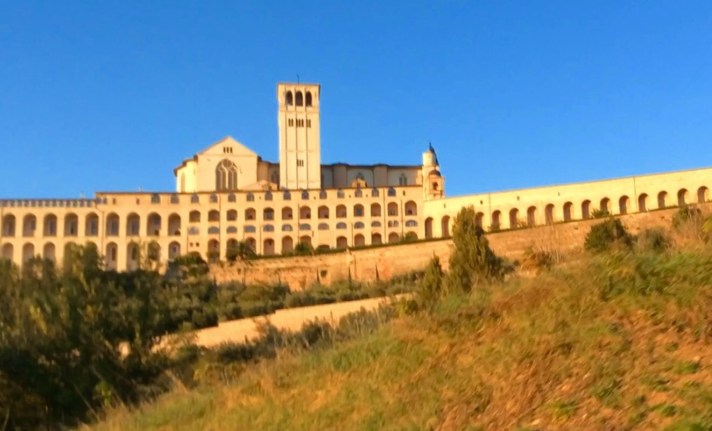
Assisi for kids 

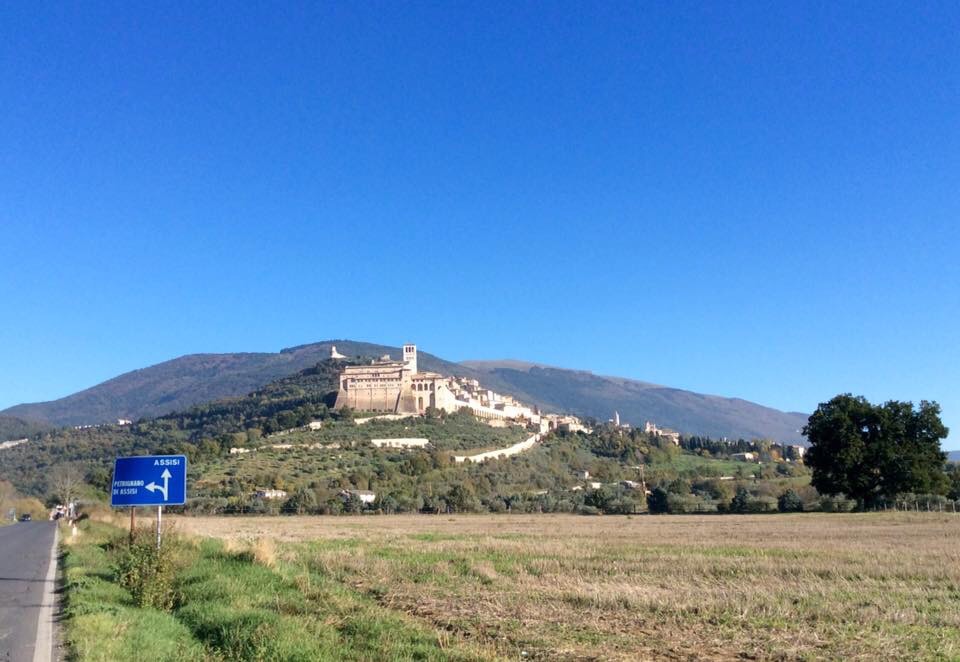
Let’s face it, Assisi attracts so many tourists because it IS so magnificent and there are so many incredible monuments, works of art, views and attractions that you would be plain stupid not to experience them!
Even though I long ago ceased being a ‘tourist’ here and Assisi has become just another place to meet friends or shop or go out for a meal, I nearly always walk to the Basilica della San Francesco because it continues to fill me with awe and wonder and I still marvel at the amazing architecture and murals.
Assisi is the most magical of towns and one which needs to be lingered over. To be explored. To be experienced in the cool of the morning before the crowds and in the evening when a magnificent sunset bathes the basilica in a golden light. To wander through its mellow streets late on a summer evening with soft music and delicious aromas permeating from hidden trattorias. I would even suggest that one simply wanders on a first visit to capture the atmosphere before engaging in any serious sight-seeing.

But what about the kids???

I first visited the city as an eighteen year old so not exactly a kid! Although, since it was my first trip outside the UK I certainly felt like one! 

In stark contrast our eldest daughter was just five!  Although she has now lived and worked in four countries and visited so many others that I’ve lost count, Assisi is the first  place she insists on visiting everytime she sets foot in Italy!  

So, yes!  Assisi can be a magical place for children too but I think it does depend on how one approaches the visit.  

If you arrive around lunch on a stinking hot day and trail the kids around crowded streets and through every church then definitely NO !  They will not think that Assisi is magical. Just the opposite! 

Assisi is the hottest place on earth in the summer with sunlight reflecting off every facet of its pinky white buildings. It is also blessed with lots of steps and hills!  I have to admit that our daughter number two did once (aged 4) sit down  at the bottom of some steps and refuse to go up!  We learnt our lesson! 
So. What do you do if you can really only spare one day and it’s during the summer school holidays and HOT? 

First prepare the kids. Read them stories about St Francis and Santa Chiara and make them aware of the earthquake. People who say they don’t want their kids to learn anything about religion, are, in my opinion extremely shortsighted!  Let’s  face it without religion  there wouldn’t be any culture and very little art or beautiful buildings! Take away religion and places like Assisi wouldn’t exist! Granted religious battles wouldn’t have happened but  wars and terrorism would still have occurred because unfortunately that is human nature not faith!  St.Francis is everywhere in Umbria and you will miss so much if you don’t know a little of the background. 

Get up early. Pack a picnic. Get out early. Arrive in Assisi by ten. Stop on the way to marvel as the breathtaking apparition as this city appears on the horizon.  Park on the outskirts of the town and wander around the magnificent church of Saint Maria and the Angels. It has a tiny church inside the larger church which looks no bigger than a dolls house and is sure to captivate the  hearts of children.  They will also enjoy deciding if the doves on the huge statue of Saint Francis in the Rise Garden are real. You may have to wait a while to catch one of them blinking! 
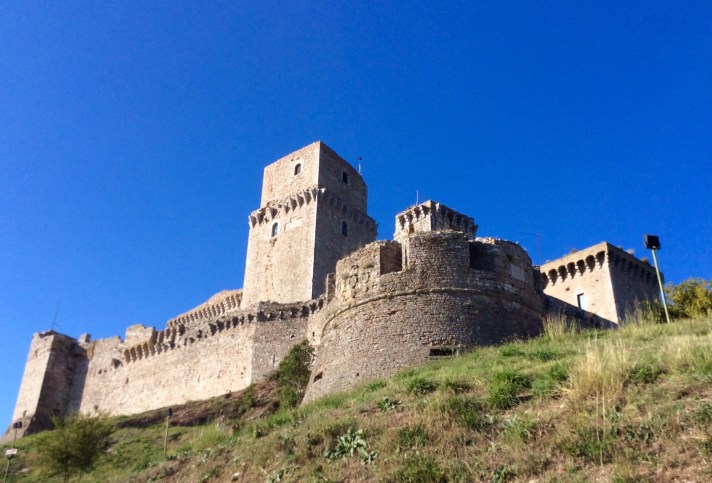

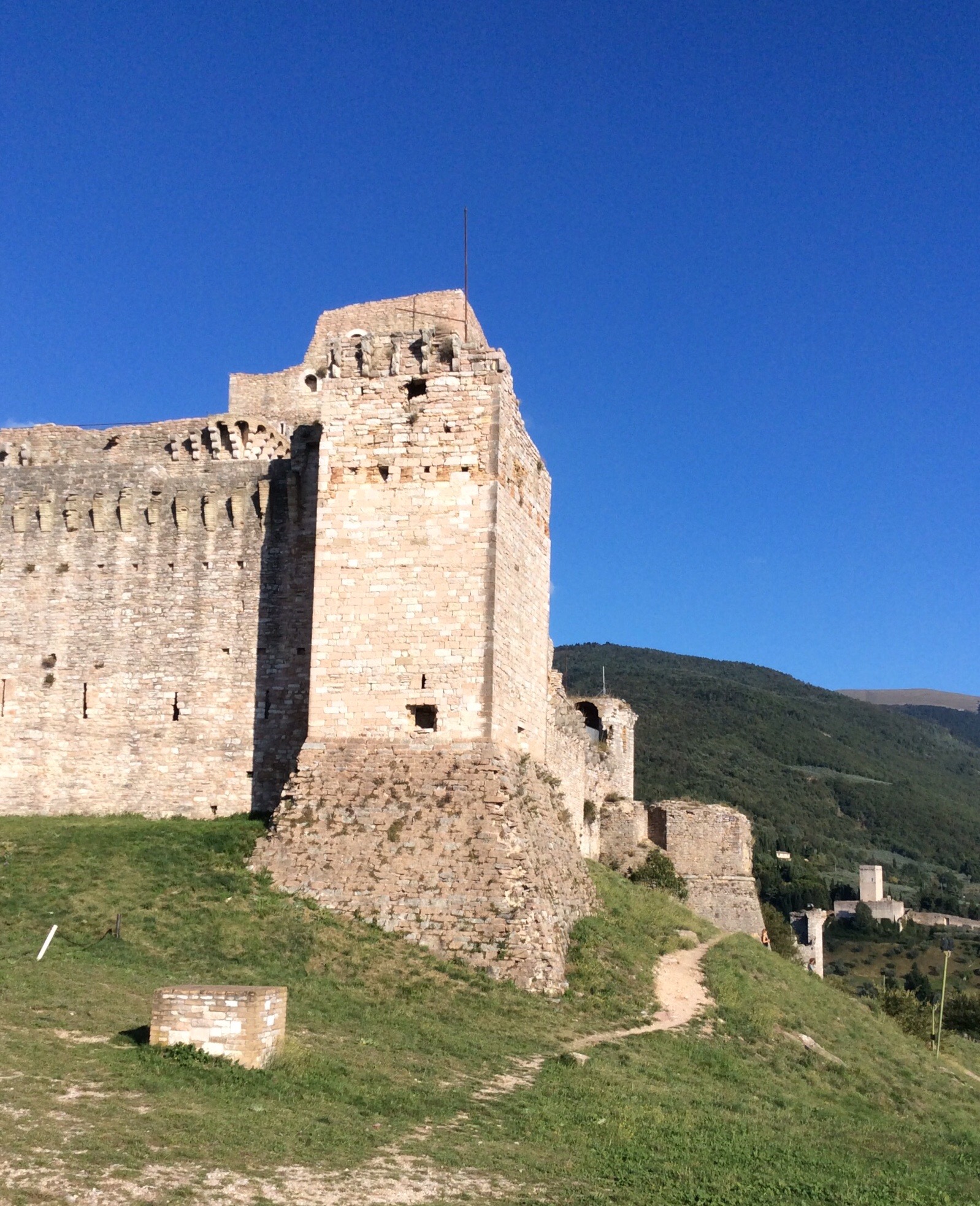
Enjoy a coffee in one of the local bars and then drive right up to the Rocca Maggiore and enjoy your picnic before exploring the ruins.  The walk up to the Rocca is beautiful in the spring and autumn. In the summer it will finish you off! 
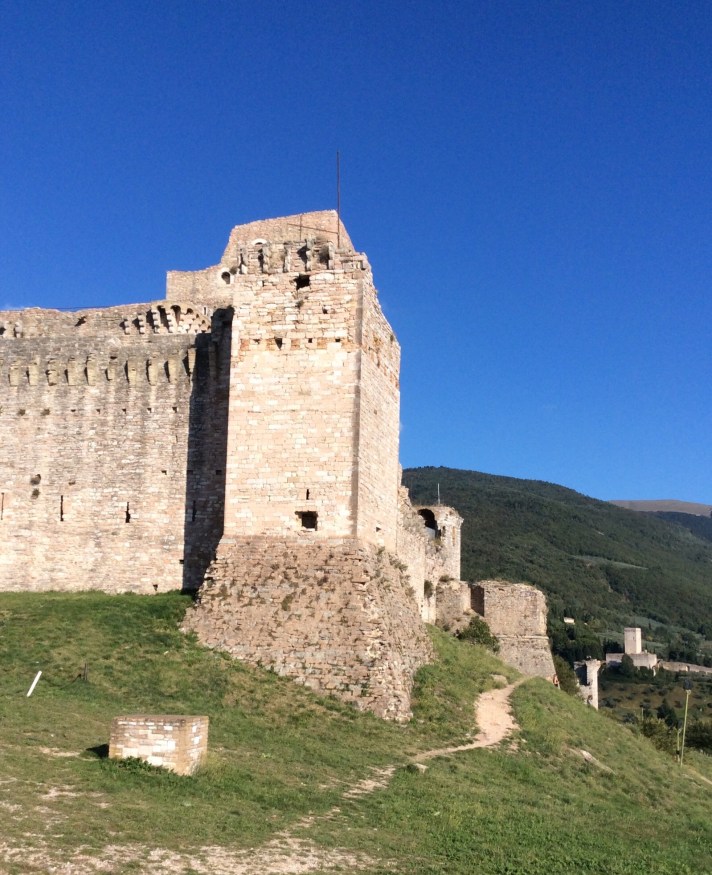

The afternoon can be spent quietly reading and taking photographs or playing games. The Rocca is a great place for hide and seek with its stone towers and ramparts and a spooky dark tunnel!  There’s also a lovely grassy courtyard which is great for letting off steam.
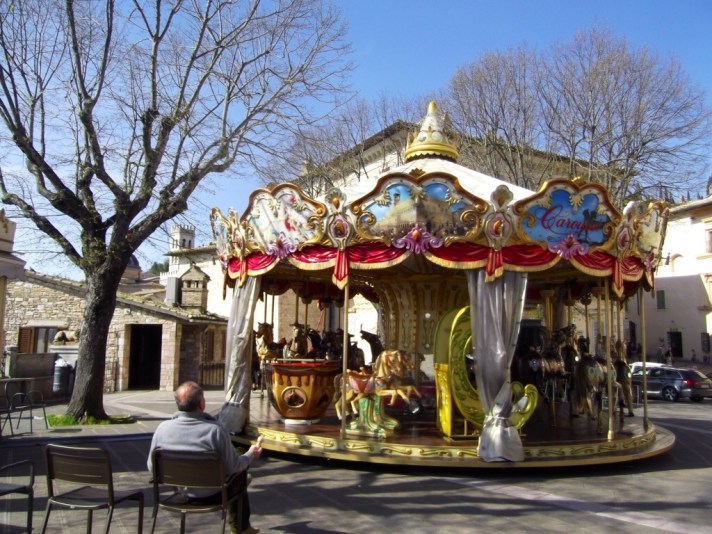

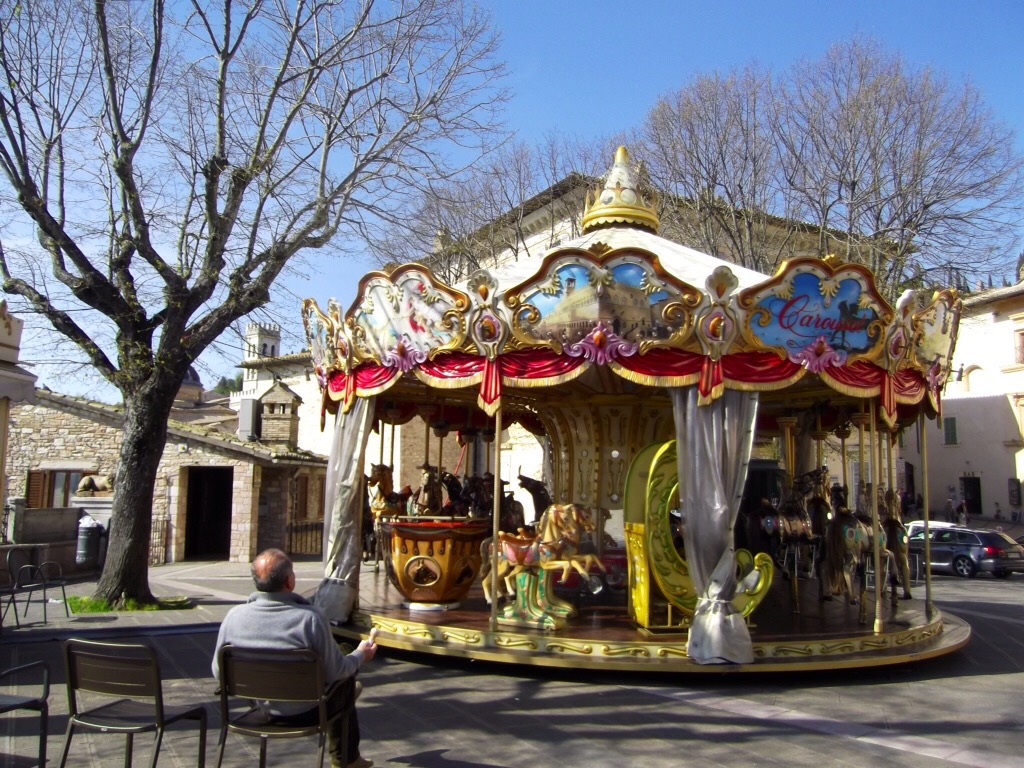
When it approaches 4 O’clock drive down and park. Then you can wander up into the main town and have a quick wander around the church of  Santa Chiara. There is a Carousel outside the church which the children can enjoy after the visit. On the way to the Basilica della San Francesco you will pass an enchanting toy shop with lots of wooden toys, Pinocchio being the main attraction.  A good break between churches and the toys are very unusual and very beautiful.  

Franchi. The address is Via Portica 15/A

Another ship they will enjoy is the Laboratorio Artistico Alice. This shop is full of hand painted items. Gifts and T shirts and all sorts. An Aladdin’  Cave! 

Address: Piazza Chiesa Nuova 
The next stop is the Basilica della San Francesco which is out of this world. It is also wonderfully cool. The crypt is a ‘must’. Even the youngest will be totally in awe of the glittering decorations and atmosphere. 

The evenings in Assisi are beautiful so enjoy an early meal. We like the little ristorante near the fountain. After dining you  can  wander around the  backstreets  basking in the golden light that bathes the town after dark. 


Some tips.

Ice cream. Children love ice cream. There are a couple of very elaborate and beautiful ice cream parlours but  my advice is to go to one of the small bars where you will pay less and be served with a smile! 

The same goes for drinks and snacks. 


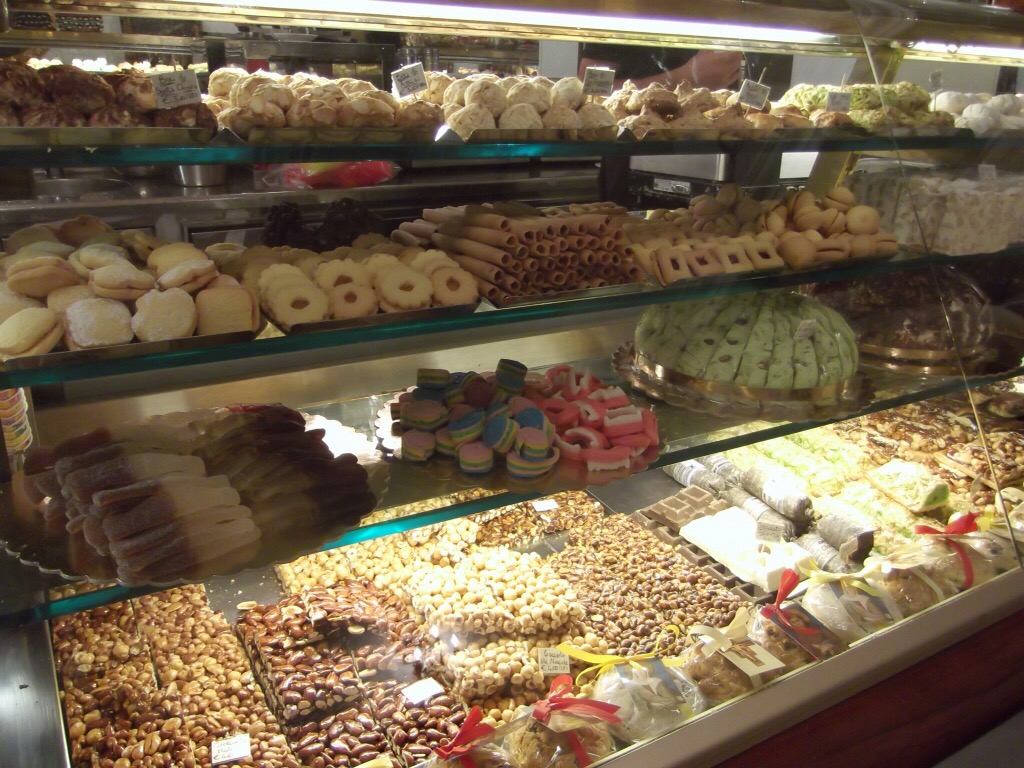
Cakes!  Giant meringues and brightly coloured and nutted slabs of cakes tempt you from many windows!  Just be aware that you pay by weight and that can be staggering! 

Local produce. There are many shops selling local foods. It’s always a good idea to pay a visit to a supermarket before buying from this type of shop. Then you can distinguish between the real local produce and the overpriced items you can pick up at half the price in an alimentare.  Packets of Torta al Testo being a common one! 

Make a Spider’s Web

Here’s the web for yesterday’s spider .

It’s not difficult. Just fiddly!  AND sticky! 

I recommend that this web should be made by an older child or adult. 

I will be back later in the week with simpler webs for young children to make 


And here are the instructions

Meet one of the oldest animals to inhabit the earth 

Yes! It’s the European House Centipede. Fossils have been found dating back more than 400 million year so it can definitely claim to be one of the oldest animals on earth!  Lizzie found it wandering around Jumble House and thought you would like to see it before we set it free again. 

What kind of an animal is it? Well it’s not an insect because it has more than six legs and it’s even got more than a spider!  A centipede belongs to a group of animals called Arthropoda. Crabs and lobsters also belong to this group. 

It’s also one of the fastest running like grease lightening at a speed of 40 miles an hour so it would be breaking the speed limit in all the built up areas of the U.K. or Europe!

100 legs? No!  Although the name suggests that they have 100 legs they just look like they have.  Most European centipedes have about fifteen pairs of legs. The legs are very thin and nearly as long as it’s body.  Centipedes can live for several years and they can regrow their legs which often get chopped off when a bird tries to catch them! They live in dark damp places like under rocks and wood and prefer to hunt at night. 

Are they dangerous?  No.  Just scarey because they are so wiggly and move so quickly.   They have poisonous front claws but these are too small to bite through our skin.  In the desert there are giant centipedes which can bite humans and this is a bit like being stung by a bee.  They use their claws to catch food for their dinner. They are carnivores (meat eaters) and eat insects and other bugs like worms and they may even eat their friends!  The larger ones can eat frogs and birds! 

But, despite their choice of food, Centipedes can be good mothers and some carry their eggs around until they hatch. 

For more on centipedes and to have a closer look at the one Lizzie Witch found at Jumble House, click on the link below: 

The European House Centipede

Learning a Second language.


Why do we speak? 

We speak to communicate.   We also enjoy speaking. We want to talk! Some more than others! It’s fun to meet friends and have a chat. We enjoy watching or listening to others talking on the TV or radio. We learn just about everything from language. All this appears obvious and yet somehow these really basic facts often appear to be have been forgotten or overlooked when learning or teaching a foreign language. 

Let’s  think about how a toddler learns to speak and why it wants to speak. After all for many months it only needed to cry to get what it wanted!  Those were the days when it’s basic needs could  be counted on one hand! Tired. Wet. Hungry. Too hot. Too cold. Once you need two hands to count then another form  of communication is added and that is usually physical. So the child still cries but also starts to point or grab or mime and wave its arms about! (a bit like we do when on holiday in a foreign country). Parents frantically make guesses  and are hopefully met with a smile and a nod but more often than not with violent shakings of the head or stamps of the feet or both!  Just at the developmental stage when frustration is likely to win, language kicks in and LO ! We have speech communication albeit only the odd word. 

A native language is learnt by listening, watching, copying.   Trial and error.  Although we may not actually ‘teach’ our two year old we will, without realising, correct and expand the phrases they utter. For example. A child may say, “Daddy going.” We would say, “Yes. Daddy is going to work.” Without realising , the child stores this information and builds on it. 

But when a parent speaks to a child the emphasis is on getting the meaning across and not the grammar. 

Imagine the frustration if a parent corrected their two year old every time it got the grammar wrong!  The child would probably give up and go back to pointing and screaming!  Although older children and adults don’t succumb to such tactics (although they probably feel like doing) too much emphasis on using correct grammar, verb tenses etc is a big ‘turn off’ and can stop both adults and children from communicating

A child is like a sponge. It’s brain absorbs information about language continually. Long before if utters its first words it is absorbing not just the words but the rhythm and pattern of speech. This silent period of acquisition is essential but is this quiet period allowed when learning a second language? In my experience the answer is definitely ‘No!’ Unfortunately the older we get the less we resemble a sponge and so the longer this period of silent acquisition needs to be! 

But in many language classes the expectation is to  use the new language from the first lesson. To repeat. To answer questions, often in front of classmates and this leads me onto another very important obstacle to learning. Anxiety

What happens when you ask your toddler to repeat something it has just learnt to say. We’ve all done this. One day little Molly picks up an apple and says ‘apple’ for the first time. You are naturally very excited and can’t wait for her to repeat this to everyone!  When Granny and Grandad arrive you show Molly an apple and ask her to tell them what is is. Does Molly  perform? Probably not!  

What would happen if you put pressure on her like this every day ?  If you asked  her to repeat every new word or phrase to every Tom, Dick or Harry?  It is likely she would become anxious and anxiety is a major killer when it comes to learning

But isn’t this what happens in many language lessons?  There is the pressure to speak. Some kids and adults are ok with this. To others it is a nightmare. They become anxious. This stops them learning. Then they feel they have failed and so it goes on in a downward spiral. Teachers need to understand that silence can be golden !  That students who don’t participate may need this silent period of acquisition and putting pressure on these students will only cause anxiety. 

This doesn’t of course just apply to the teaching of language. It applies to every subject. But since language is the means of communication and we need to acquire language to communicate then it is vital that the emphasis is about getting over the meaning. Then and only then should the actual structure of language be addressed. 

So what do I think is the best way to learn a language? 

I think what I am going to say applies to learning everything

  • First you must want to learn . There must be a reason. An incentive. 
  • Secondly it must be fun.
  • Thirdly it should be a shared family activity.  We can’t expect our children to be interested if we are not ! 
  • Fourthly and I think this is so important. The learning should be multi-sensory. This means that all your senses  are involved.  It has been proved that bette learning takes place when the activity is multi-sensory.  A good example of this is when you are making bread.  Your sense of touch is used to determine when the dough has been kneaded sufficiently. Your sense of smell is activated during the making and baking and your sense of taste through the eating! That is also a reward and an incentive. Your sense of sight is important to ensure the dough has risen sufficiently and that the loaf is the correct shape etc. 
  • Lastly the activity should introduce vocabulary that can be used over and over again during our everyday life. 

Cooking Projects are often featured in my Jumble Fun English programmes because they do fulfill all these requirements. 

​I also use art and craft projects for the same reason. They are very ‘hands on‘ activities for families to enjoy together and the new vocabulary is easy to incorporate into daily activities. 


​​Remember children learn best by ‘doing’! 


Take a look at this video English lesson which uses  a cooking theme: 

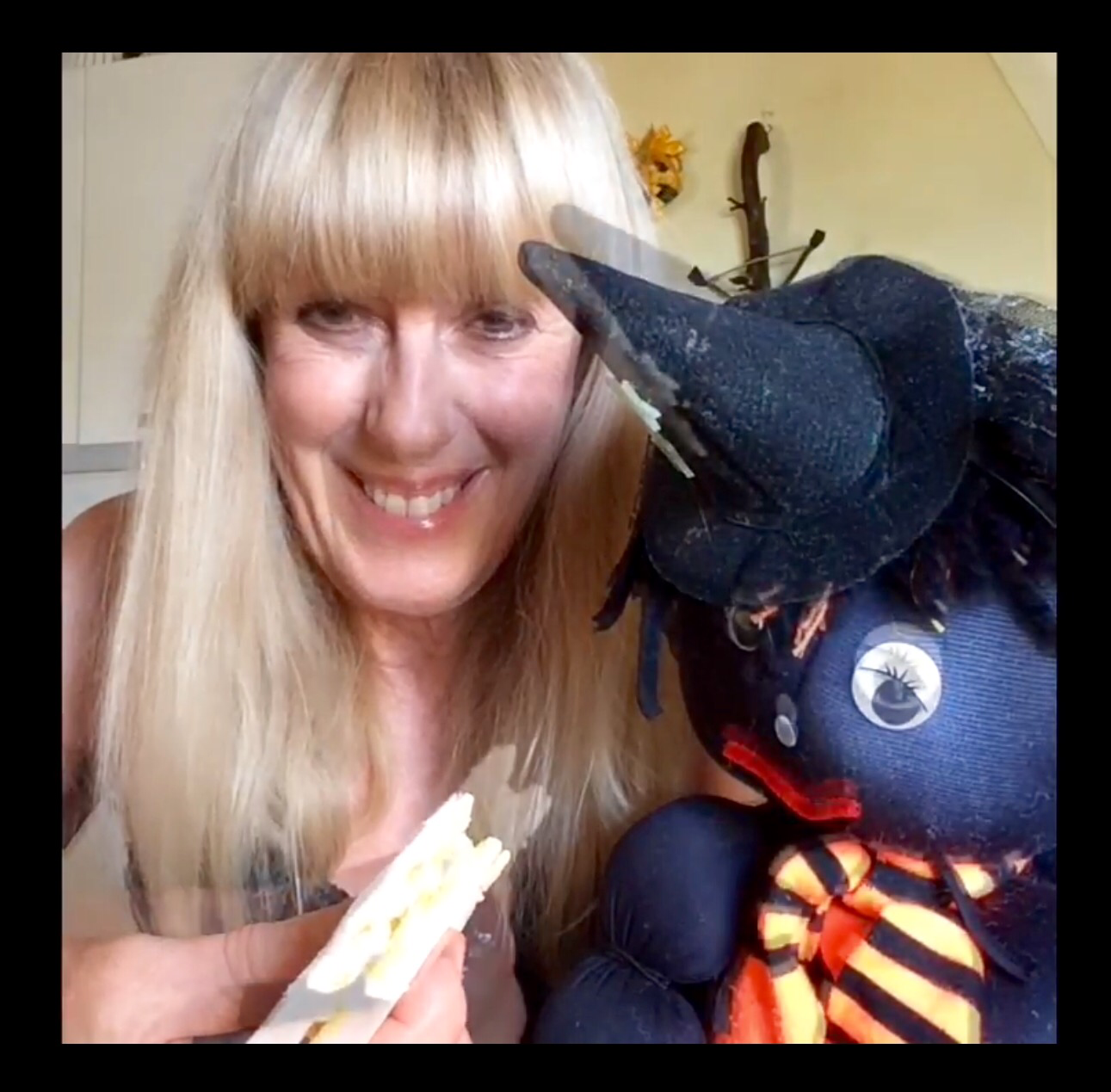
Make an English Sandwich

The Jumble Fun English Channel: 

Jumble Fun English Channel

Happy Bank Holiday Weekend UK! 

Four  steps to enjoying a perfect family Bank Holiday afternoon! 

1. Buy some bananas and milk and make some ice.

2. Watch the video together 

3. Make the drink together. 

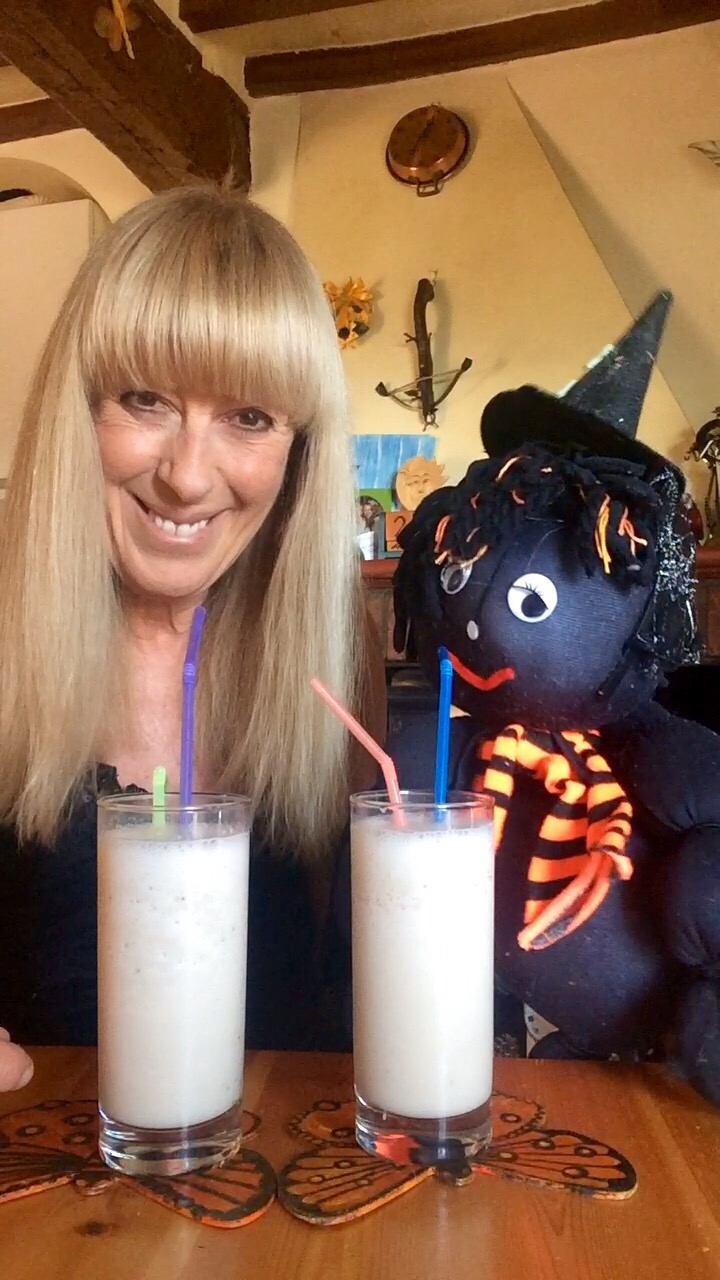
4. Put the video on again and enjoy your drink in peace while the kiddies are enjoying Lizzie Witch … again and again! 

Enjoy! 

Here’s the link: 

Make a cooling banana drink with Lizzie Witch

What a Storm! 


Last night we had a thunderstorm. In fact it’s still happening! ! That’s 14 hours of thunder and lightening !  

The lightening was so bright that it lit up the whole sky. 

We were all kept awake at Jumble House but it was fun to watch! 

So, what IS a thunderstorm and why do we have them? 

Well, thunderstorms usually occur in hot, humid weather and for the past week it has been very hot and humid! 

We say it is humid when we feel warm and sticky. This is because the air is heavy with moisture (water vapour). 

Hot air rises and when this hot air is also full of water it builds up into great big peaks of cloud. These clouds have a very big name too!  CUMULONIMBUS.  They are very angry clouds with storms raging inside ! 

The cloud becomes fuller and fuller with water and when it can hold no more it lets it all go and we have very heavy rain. 

Lightening happens because the air rising inside the cloud carries a negative charge of electricity

But the raindrops falling to the bottom of the cloud carry a positive charge. 

When these charges meet inside the cloud there is a violent  battle and sparks of electricity are made. This is the lightening.  The lightening is very very hot. This heat makes the air around get bigger (expand) and then suddenly get smaller agsin (contract). This expansion and contraction makes the b a n g . The thunder. 

A storm is fun to watch but please keep safe! 

  • Don’t shelter under trees…keep low on the ground. 
  • Keep away from anything made of metal like poles and fences.
  • Keep out of  water and that includes puddles! 
  • If you are indoors unplug all computers and electronic equipment and the TV.
  • It’s fun to watch but don’t get too close to the window.

Just look at this video we took during the night! 
A very long storm

Let’s Make a Picture Frame

The second of the Sunday Challenges on recycling old magazines.

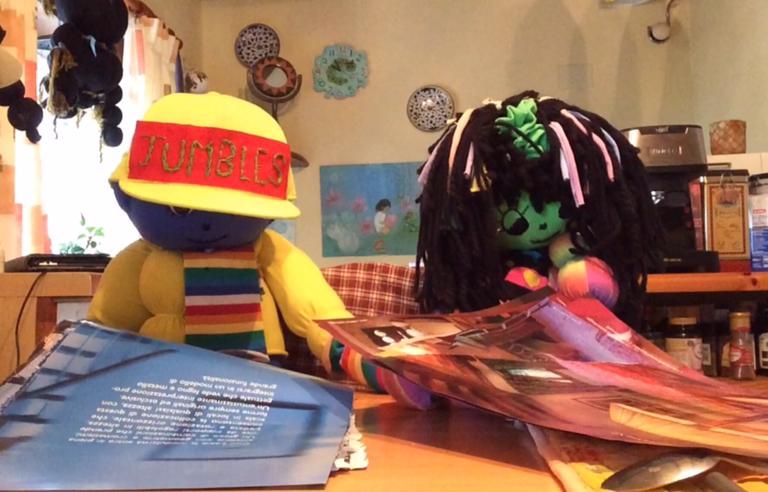
Georgie and Alfie make picture frames from magazine pages.

This activity is suitable for children from three years upwards depending on the amount of adult help. We always advise adult supervision for Sunday Challenges. 

Learn how to make the picture frames by clicking on the link below: 

 Make a Picture Frame with Alfie and Georgie

Olives and Olive Groves

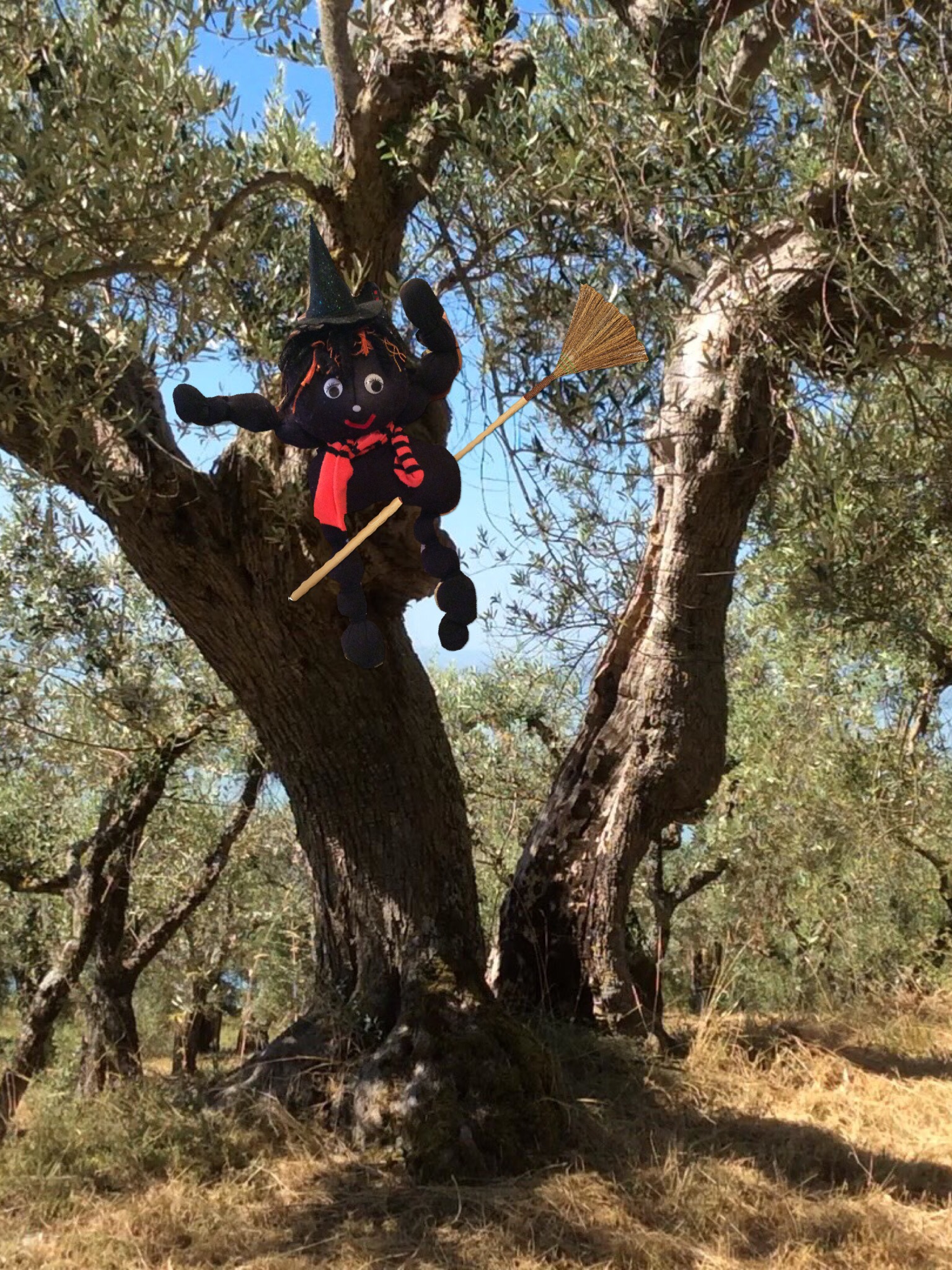
A ‘Travel with Georgie’ video . The Jumbles  visit the olive groves in Passignano and have lots of questions! Do you know the answers? How can you find out? 

Today’s Sunday Challenge


Click on the link below to listen to watch today's programme.

https://youtu.be/QO2qkQsip_4